


Four decades of self assessment
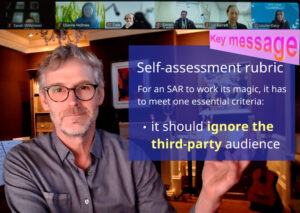
I recently provided some training on self assessment and development planning for the wonderful team at ATTFE College. I’m sharing their comments here as they’re a wonderful milestone in a near 40-year journey…
I’ve been a massive fan of self assessment from the end of my first year in teaching, back in 1987/8. The impact of embracing it as a wholly positive, team-driven act was profound. And I’m very proud to say that this wonderfully creative experience ultimately had a knock-on effect on countless musicians over the last 40 years.
Back in 1987, we were ‘forcing’ square-peg pop musicians through the A-level Classical Music round hole. Having been something of a square peg myself, I knew all too well what a depressing experience it was to be made to study the wrong qualification.
So at the end of the 87/88 academic year, our team decided enough was enough. To solve all of the challenges we’d identified in our course review, we felt the only solution was a revolution: to write an internally accredited, full-time, 2-year Light Music Diploma. As a result, a few years later, I was delighted to be invited by BTEC to head the team tasked to write the first National Diploma in Popular Music.
So why the personal history? Back then, nobody asked us to self assess; that requirement came much later after Incorporation in 1994 and the launch of Ofsted’s forerunner: the FEFC. We were in control of quality, and we could see that our investment would lead to an easier life for us and a richer experience for our students. I don’t think we were particularly skilled at it, but we had exactly the right attitude, which is why self assessment worked its magic so well for us.
In my self-assessment training of today, yes, there are definitely skill-based learning outcomes I work towards, but by far the most important outcome (which, btw, is not shared with delegates) is to attempt to nudge (if needed) their attitude towards self assessment as a fabulously creative act.
And that’s why my day was absolutely made by the comments from ATTFE College:
“What stood out most was the cultural message that self-assessment should not be something we survive each year; it should be something that strengthens professional dialogue, sharpens leadership thinking, and creates a genuine roadmap to excellence.”
How often do you write attitudinal-change learning outcomes for your sessions? For me, at least, they’re the most important of all.
Thank you again, team ATTFE.
Comments
No comments yet